
The project would be carried out indigenously and the majority of the technology and equipment to be used would be made in India.

The surface-to-surface missile, powered by solid propellants, was test-fired from a mobile launcher at 10.10 am from launch pad-4 of the Integrated Test Range at Abdul Kalam Island (Wheeler Island), defence officials said.

The test was carried out by DRDO against a high-speed unmanned aerial target which was successfully intercepted by the missile.

The Defence Research and Development Organisation has developed an advanced chaff technology, which is used to distract enemy's radar-guided missiles, to safeguard Indian Air Force fighter jets from enemy missiles.

In the QKD technology, encryption keys are sent as qubits in a fibre optic cable. Quantum computing uses qubits as basic resources, similar to how bits are used as basic resources in classical computing.

A series of deaths in a remote village in Rajouri district, Jammu and Kashmir, are not due to any disease, according to the Health Minister. Tests conducted by various institutions, including the ICMR, NCDC, and DRDE, have returned negative results. However, the minister has ordered an investigation into the deaths to determine the cause.

Scientists have applied their technical know-how and expertise in textile, coating and nanotechnology to develop the PPE having specific type of fabric with coating.
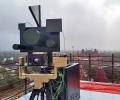
In order to have protection against drone attacks, all the three defence forces including the Army, Navy and Air Force have signed contracts for acquiring DRDO-developed anti-drone systems.

The flight test fully met all the trial objectives validating complete network centric warfare weapon system, the defence ministry said.
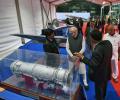
Defence Minister Rajnath Singh on Tuesday unveiled a new version of the procurement manual of the premier military research institute Defence Research and Development Organisation featuring simplified procedures for the involvement of the private sector in various research and development projects.

After the success of Agni-V project, India is developing an Anti-Radiation Missile which can hugely multiply the strike capabilities by destroying the enemy's advance warning system.

The defence ministry on Thursday sealed a contract to procure 118 main battle tanks Arjun for the Indian Army at a cost of Rs 7,523 crore, in a major move to boost its combat capabilities.
This is the third test firing of the missile in the last five days, the sources said.

The ministry said the rocket system has been upgraded with advanced technologies enhancing the range to meet the emerging requirements.

India has its share of both large tech companies and large national laboratories, but why is it that these don't seem to be at the forefront of any innovation news headlines? asks Ajit Balakrishnan.
It will be powered by a supersonic combustion ramjet (Scramjet) engine that takes oxygen from the atmosphere and burns liquid hydrogen.

Designed to be a quick reaction missile, it has a strike range of 25 km to 30 km.
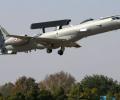
The AEWS&CS was developed by the Centre for Airborne Systems, a laboratory under the Defence Research and Development Organisation headed by woman scientist J Manjula.

It said clinical trials of the drug 2-deoxy-D-glucose (2-DG) showed that it helps in faster recovery of hospitalised patients and reduces supplemental oxygen dependence.
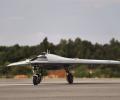
The Defence Research and Development Organisation on Friday successfully carried out the maiden flight of the indigenously developed unmanned aircraft at Chitradurga, Karnataka.

The conversion facilitated range enhancement and improvement in Pinaka's accuracy.

'Each lab is working on a key advanced technology of importance to the development of futuristic defence.'

'Russia has got inherent military strength, they have a very good military equipment manufacturing infrastructure and by and large they are self-sufficient in their production capabilities'

A pet project of the Indian Army, four-legged robotic prototypes have been making waves at the Republic Day and Army Day parades in the past year.

One hopes in his next term, Narendra Modi will take up the mission of inculcating respect for following rules in Indians as a mission. Therein lies the chance for India to become a developed country, asserts Colonel Anil A Athale (retd).

Describing the mission as a "major milestone" in the development of BrahMos, the sources said that the air version of the missile was test-fired from supersonic fighter aircraft Sukhoi 30 MK-I at 10.30 am.

The new variant of the Akash missile (Akash-NG) can strike targets at a distance of around 60 km and fly at a speed of up to Mach 2.5.

The laser-guided anti-tank guided missile is likely to significantly enhance the fire-power capability of the Indian Army particularly along the frontiers with Pakistan and China, the officials said.
A land-attack version of the missile was test-launched from Launch Pad-3 of the Integrated Test Range (ITR). An air force variant was fired from an IAF fighter jet over Bay of Bengal.

The Mark-1A will be more sophisticated and capable than the Tejas Mark-1.

Distinguished scientist and Director of Defence Research and Development Laboratory (DRDL), K Jayaraman said Bharat Dynamics Limited, a public sector undertaking under the Ministry of Defence, is currently producing 50-60 indigenously-developed Akash missile per month.

ISRO's Thiruvananthapuram-based Vikram Sarabhai Space Centre successfully conducted a series of drogue parachute deployment tests at the rail track rocket sled facility of the Terminal Ballistics Research Laboratory in Chandigarh during August 8-10.

Research and development (R&D) spending by BSE 100 companies has grown steadily, rising from 0.89 per cent of revenue in FY20 to 1.32 per cent in FY24, averaging around 1 per cent over the period in-between, according to data compiled from Bloomberg and company annual reports. Also, these companies more than doubled their R&D spending in absolute terms over these five years: From Rs 25,041 crore to Rs 63,072 crore. While this reflects a prioritisation of innovation, corporate R&D investment remains relatively conservative.

It said the ATGM has been developed with a capability to launch from multiple platforms and is currently undergoing technical evaluation trials from 120 mm rifled gun of MBT Arjun.

The walk through enclosure is designed for personnel decontamination, one person at a time. It is a portable system equipped with sanitiser and soap dispenser, officials said.
DRL, Tezpur is harnessing all this spice into military applications, such as high-effectiveness tear gas. Meanwhile, the World Wildlife Fund asked DRL to explore the possibility of using Naga chilli to keep wild elephants away from villages and fields.
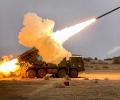
The rocket systems that were tested at Pokharan field firing ranges were manufactured by a private industry following transfer of technology by the Defence Research and Development Organisation.
In an effort to protect India's vast coastline and ports from various threats, sea bed arrays and unmanned underwater vehicles will be used for ocean surveillance.
India is developing a 5,000 km-range Agni ballistic missile, Defence Minister A K Antony said on Monday.
Top DRDO scientists say indigenous missiles would cost barely half as much as a foreign alternative, reports Ajai Shukla.
